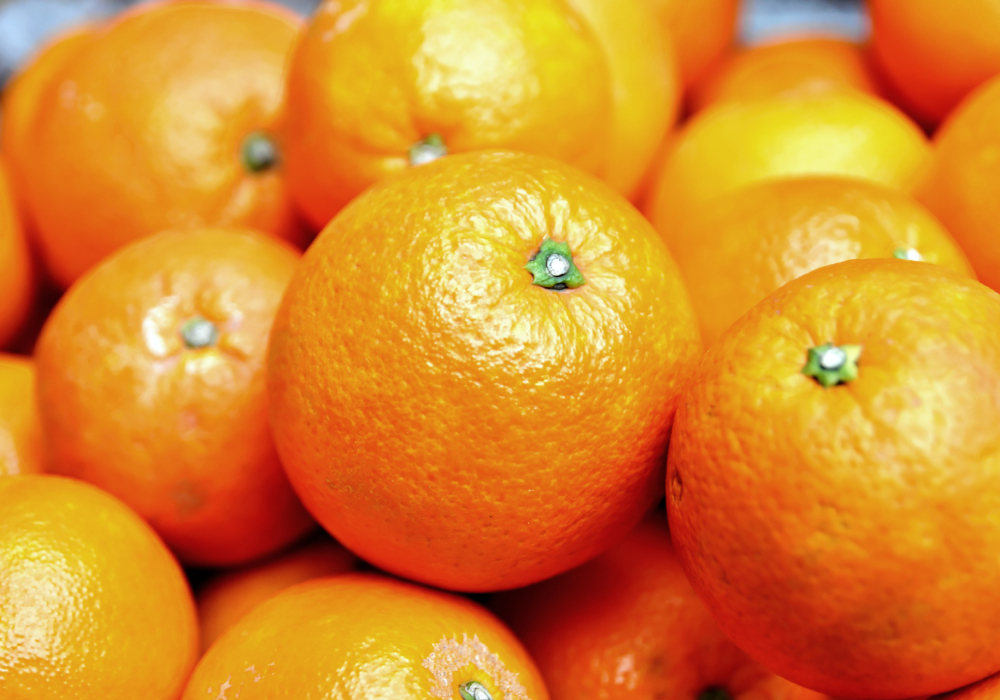
Moroccan oranges are renowned for their balanced sweetness, high juice content and fine skin. Grown in sunny, irrigated orchards, they benefit from agronomic know-how that has been handed down for generations. Thanks to its proximity to European and African markets, Morocco is one of the leading citrus exporters in the Mediterranean, with premium-quality oranges for fresh consumption or industrial use.
Main growing regions
Oranges are grown in areas with fertile soils and a stable climate, ideal for the development of sweet, juicy citrus fruit:
Gharb (Kenitra - Sidi Slimane): large export zone, high yield.
Souss-Massa (Agadir - Taroudant): quality production with an extended season.
Berkane - Oriental: specialized orchards for late varieties.
Storage: 4 to 6 weeks in a controlled atmosphere (4 to 7°C)
Transport: sea or road, with logistical traceability
The oranges are graded, washed, waxed and packaged in approved plants according to the requirements of the importing country.
Choose the Orange of Morocco
À L'Aube de Dakhla offers you Moroccan oranges that are sweet, juicy and calibrated for export. Thanks to a structured offer, solid certifications and optimized logistics, we can help you develop your fresh fruit business.
Receive your personalized quote and schedule your seasonal deliveries now.
Why choose our fruit and vegetable products?
Controlled freshness
We control the entire production and logistics chain to offer fruit and vegetables that are harvested when ripe, and preserved in an ideal atmosphere.
Nutritional quality
Our products retain all their natural properties: taste, vitamins, minerals - without artificial additives or treatments.
Certified traceability
Each batch is identified, monitored and certified by our partners according to GlobalG.A.P., HACCP and GRASP standards.
Respect for the environment
Our sustainable farming practices preserve the soil, optimize water consumption and limit chemical inputs.
🍪 This website uses cookies to improve your web experience.







 EN
EN  FR
FR  ES
ES  AR
AR  IT
IT  DE
DE  JA
JA  NL
NL  PT
PT  KO
KO